Artists in the News

Downbeat Magazine Critics’ Poll

Excited to find out that Basin Street Records made the Downbeat Magazine Critics’ Poll for Best Record Label (Aug 2011).  Also named on the poll, Dr. Michael White for clarinet, and Jason Marsalis for vibes.

Can’t Wait for Treme Season 3

Just finished watching TREME season 2 finale on HBO for the 3rd time.  It’s amazing TV. Thank you to HBO, David Simon, Eric Overmyer, Nina Noble, Blake Leyh and all the rest of their amazing writers and crew. The lagniappe … Continue reading

New Orleans Jazz & Heritage Festival

The lineup for the 2011 New Orleans Jazz and Heritage Festival, otherwise known as Jazzfest, has been announced. Jazzfest will return to the New Orleans Fairgrounds on April 29th through May 8th, 2011. Continue reading

Biography

Henry Butler
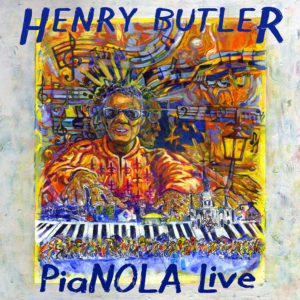
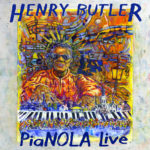
PiaNOLA Live

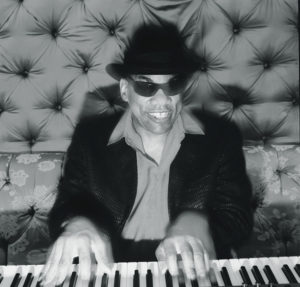
Back when he was a prodigious talent at the Louisiana State School for the Blind, Henry Butler earned a reputation for mastery. Already a stunning pianist, Butler learned baritone horn, valve trombone, and drums, then began vocal training. By sixth grade, he was writing out band arrangements; by ninth, gigging professionally. Back then, Butler was also known for mischief. He recalls in detail one practical joke, involving his Spanish teacher and a water pistol. “I could have got into serious trouble,” Butler, an eight-time [UPDATE: 10 time] Blues Music Award nominee, said of such urges as he sat at an upright piano upstairs from Snug Harbor, the jazz-club anchor of the Frenchmen Street scene in New Orleans these days. “But I learned to channel my mischief into my music, to make it part of my pursuit of mastery.”

Mischievous mastery is one consistent thread within the dual strands of Butler's primary influences: the musical traditions of New Orleans, where he was born and raised, especially a piano tradition that starts perhaps with Louis Moreau Gottschalk and runs at least through Professor Longhair; and of modern jazz pianists, including Thelonious Monk and McCoy Tyner, both of whom exploited the piano's percussive qualities as does Butler (then again, Butler's percussive playing has much to do with African drumming at Congo Square, which, by the way, informed Gottschalk's “Bamboula”). Butler likes to think quite analytically about all this - just not when he's performing. And as PiaNOLA Live – his first-ever live solo album – attests, more often than not, he’s performing.

Like so many musical heroes and ordinary citizens, Butler lost his home to the floods that resulted from New Orleans’ levee failures after Hurricane Katrina in 2005. He toured relentlessly, not knowing precisely where or when he'd settle again. He now lives in Denver, Colorado. [UPDATE: Henry now lives in Brooklyn, NY]

Along with his home, Butler lost instruments and sheet music and lots of things. But he didn't lose his memories, his deep sense of belonging in and to the city, or, thankfully for us, his tapes. Butler has always liked to record his performances: Here, spilled out into a cohesive set, are eleven hand-picked takes - recorded at various locales, some dating back to the mid-1980s, some as recent as last year. PiaNOLA Live, released in April 2008 by the New Orleans-based independent label Basin Street Records (distributed through RED), tells a compact story of how New Orleans filled Henry Butler with inspiration and how he, in turn, has processed and poured forth that energy. They speak of where he's been, what he's heard, what he's made of New Orleans music and how he's turned far-flung tunes into Crescent City artifacts. The collection, produced by Butler and pianist George Winston, is the first in a series of albums to be compiled from Butler’s archives.

There are literal nods on PiaNOLA Live to important mentors: “North American Idiosyncrasies” was composed by clarinetist/educator Alvin Batiste, with whom Butler studied at Southern University. Butler likes to recall how his “bunch of ghetto guys” at Southern would routinely trounce better-funded, more technically proficient student bands at competition, in part due to tunes like this one, “written for us, sort of like Ellington did for his band.” It was Batiste who arranged, somewhere in the mid-1970s, for Butler to sit down for with Professor Longhair, whose anthem, “Tipitina,” Butler plays here.

The 1970s is a focal point within this repertoire. These were flush times for Butler. He had two regular gigs at the Hilton hotel, playing solo in the afternoons and in trio during the evening. Once established there, he'd often hire a sub and sneak off to play uptown at Tyler's Beer Garden, where he established himself as next in line to standard-bearers like James Booker. And he'd steal away after gigs to a then-still-happening Bourbon Street scene, playing most nights in jam sessions at joints like the Absinthe bar. The hotel gig caused Butler to reconsider New Orleans classics such as “Basin Street Blues” (heard here as played just last year). “I used to practice tunes like that,” Butler says, “but I wouldn't play them in public. I thought it was tourist music. Yet playing them day after day opened me up. It's only tourist music if you play it like tourist music.” And this moment in time moved Butler to create. He composed “Orleans Inspiration” (here, drawn from a mid-1980s performance) in 1978 as an ode to the artistic ferment surrounding him, and to uncharted musical horizons. This album harks back yet further, to 1961, when a 12-year-old Butler sensed something unique within Allen Toussaint's “Mother-in-Law,” a #1 R&B hit as recorded by Ernie K-Doe. And it speaks of more recent stimulation, like the late-'90s collaboration with Corey Harris that led to “Let 'Em Roll.”

>p> Is Butler making embedded political statements when, in Katrina's wake, he includes in this playlist Jerome Kern's chestnut “Old Man River”? Or when, having suffered through unsatisfying dealings with FEMA and other bureaucracies, he chooses Billy Preston's “Will It Go Round in Circles”? Or are these just great vehicles for his musical gifts? He won't say. But when I point out, there, in the upper register, more than four minutes into an old Chris Kenner tune “Somethin' You Got,” the melody of Thelonious Monk's “In Walked Bud” – buried, sure, but clear as day – all Butler does is smile mischievously. Like a master.


-Larry Blumenfeld, 2008


Henry Butler
A Brief History


Henry Butler, an ten-time Blues Music Award nominee, has been called “the pride of New Orleans” (Dr. John), “a piano genius” (All Music Guide) and “the greatest living proponent of the classic New Orleans piano tradition, playing an amalgam of boogie-woogie, jazz, blues and classical in the lineage of Professor Longhair, James Booker, Tuts Washington, Allen Toussaint and countless other emperors of the ivories” (CMJ New Music Report).

Born in New Orleans, Butler began playing piano at age six. He studied piano, vocals and numerous instruments at the Louisiana State School for the Blind in Baton Rouge and went on to study with keyboard players George Duke, Cannonball Adderley’s Quintet, Sir Roland Hanna and Harold Mabern.

His early albums were jazz trio recordings (Fivin’ Around with Charlie Haden and Billy Higgins in 1986 and The Village with Ron Carter and Jack DeJohnette in 1988). Butler’s subsequent works have drawn heavily on New Orleans music and the blues. His 1990 album Orleans Inspiration, recorded with Leo Nocentelli of the Meters, was followed by Blues And More in 1992. Although he briefly returned to jazz with For All Seasons in 1996, he’s remained immersed in the blues since releasing 1998’s Blues After Sunset. After collaborating with Corey Harris on a duo album, Vu-du Menz in 2000, Butler spent three years touring with the Delta blues-influenced guitarist/vocalist.

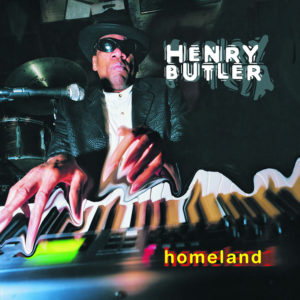
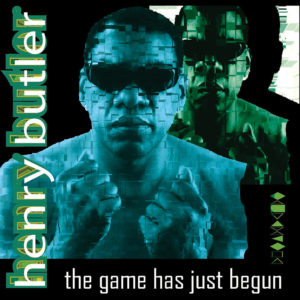
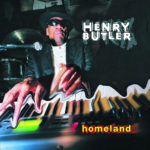
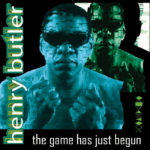
His debut album for Basin Street Records, The Game Has Just Begun (2002), was a power-packed, all-electric blues-rock album and he took things even deeper with 2004’s Homeland. With his most recent album, PiaNOLA Live, Butler delivers a love letter to his birthplace, a work reflecting the inspiration he has long drawn from New Orleans and demonstrating how he, in turn, has given back that energy, leaving an indelible mark on the city’s musical legacy. PiaNOLA Live, Butler’s first live solo album, marks the beginning of a series of albums derived from his extensive archive of performance tapes.

Although blinded by glaucoma since birth, Butler is a world-class photographer with his work displayed at exhibitions throughout the United States.


Henry Butler
Quotes


"...Henry Butler is arguably the greatest living proponent of the classic New Orleans piano tradition, playing an amalgam of boogie-woogie, jazz, blues and classical in the lineage of Professor Longhair, James Booker, Tuts Washington, Allen Toussaint and countless other emperors of the ivories..."

CMJ New Music Report

"...It's not an exaggeration to say Butler is a piano genius who has yet to be discovered by the masses. His recordings demonstrate that he can do it all: he writes his own songs, does his own arrangements of classic tunes by Professor Longhair and others, and can play with as much passion as a soloist as he can with a band..."

Richard Skelly, All Music Guide

"He is the pride of New Orleans and a visionistical down-home cat and a hellified piano plunker to boot...He plays the piano like Art Tatum, but when he starts singing he sounds like Paul Robeson."

Dr. John

"Henry Butler's name is not a household word, but over the last decade, he has established himself as the finest all-around pianist in New Orleans, a city known for its piano masters. Butler is equally at home in jazz, blues or R&B, and has toured with Verve Big Bands as well as being an acclaimed club performer in his own right..."

Jazz Times (review of For All Seasons)

Read all